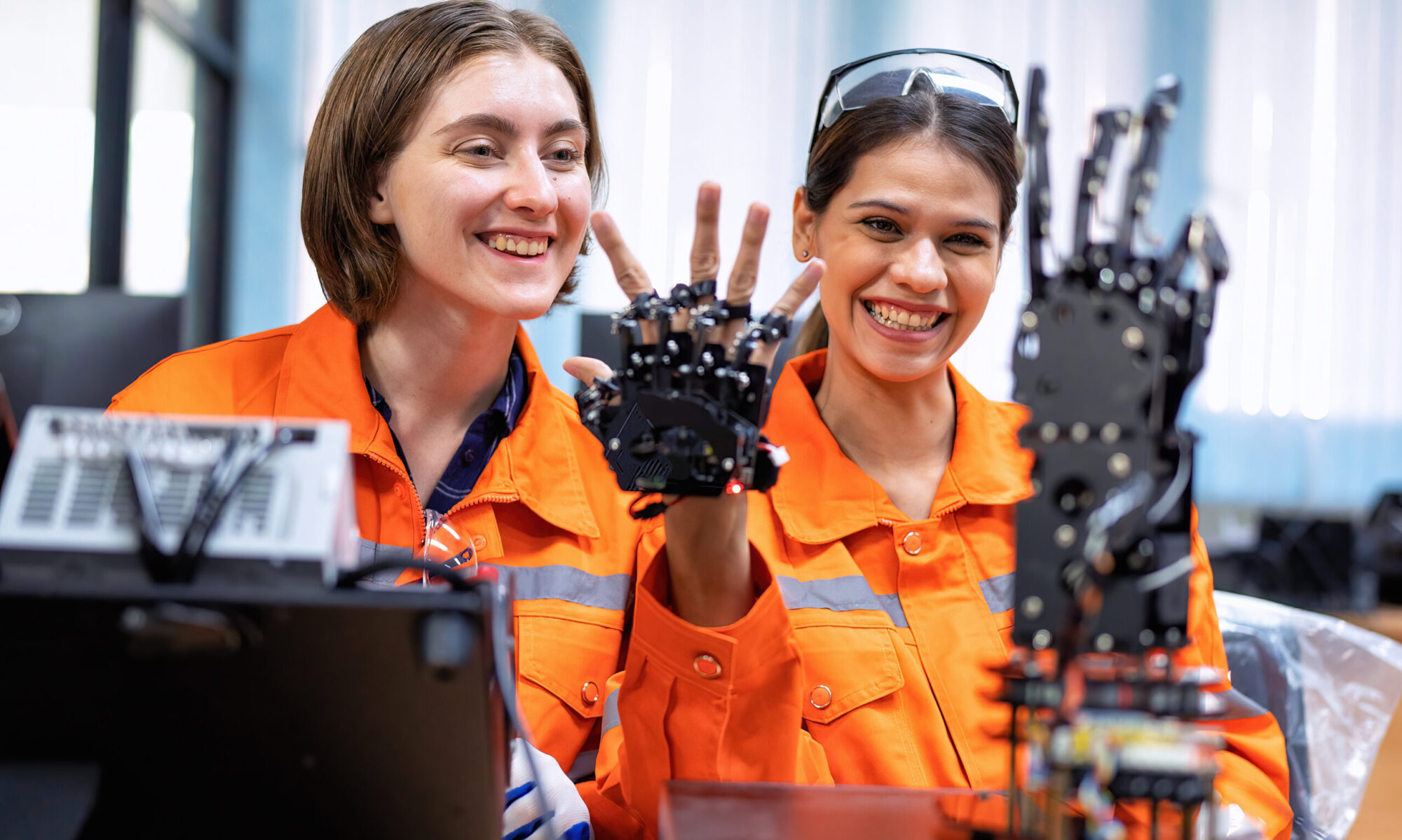
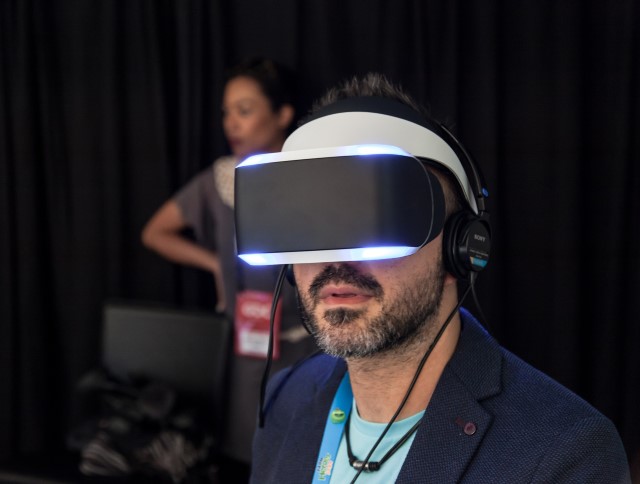
Numerous companies will be showcasing advances in the AR and gesture technology at Immersed, a two-day conference organized by The Immersive Technology Alliance. This will be a great opportunitiy to learn more about these emerging technologies, and how they relate to applications such as video games, immersive cinema, health, and more. It’s also a great opportunity to professionally network and build new relationships.
Who: Virtual Reality, Augmented Reality and 3D professionals
Where: 99 Sudbury, Toronto, Ontario
When: Sunday, Nov. 23 to Monday, Nov. 24.
It’s free to attend the exhibit floor, but the entire conference including sessions is $449.00. For a limited time, use the “gettingimmersed” coupon for a $200 discount.
Speakers include:
John Gaeta (Academy Award winner, Creative Director for New Media and Experiences, Lucasfilm);
Habib Zargarpour (Creative Director, Microsoft Studios);
Mary Spio (President, Next Galaxy);
Neil Trevett (President, The Khronos Group, VP at Nvidia); and
David Nalasco (Senior Technical Marketing Manager, AMD).
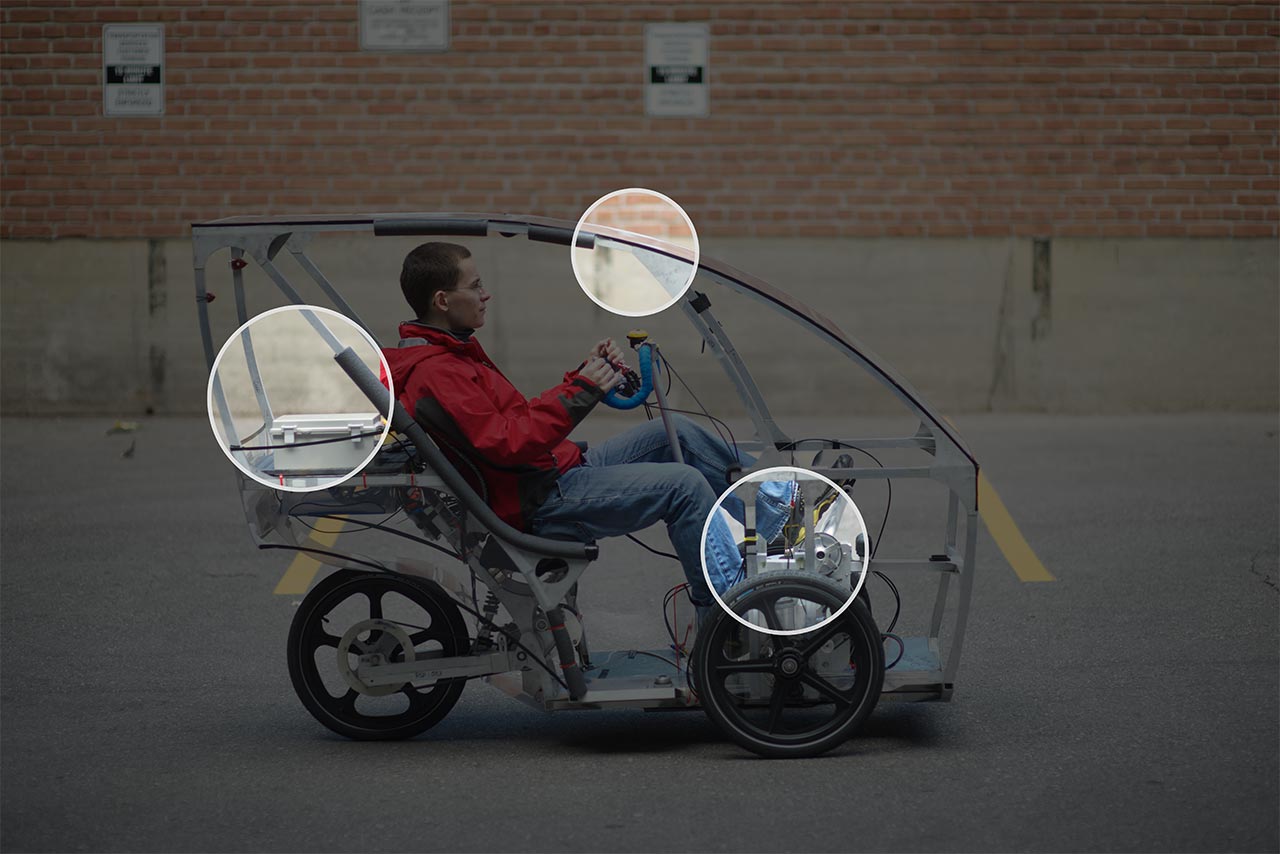
University of Toronto PhD students Phil Lam and Jonathan Lung have spent 18 months designing and building the prototype of a electric vehicle designed for urban transportation – but it’s neither a car nor a bike. Think of it as a “car-bike”.
Right now, the prototype has three wheels, an enclosure provides some shelter from the elements, and a seat for a single person. The electric motor that propels the vehicle (at a maximum speed of 32 km/h) can be plugged in to charge, or the driver can pedal to charge a battery. Eventually, they plan to add to the original design with a solar array to charge the battery and the option of having a second seat.
Lam and Lung are pursuing this project under the name “Sojourn Labs”, which is supported by U of T’s Impact Centre, a program that has been helping students, researchers, and industry collaborate on technology startups for the past five years.
The pair hopes to land a six-figure investment to turn this prototype into a commercially available product in the next year or two.
In an interview with the Toronto Star, Lam said the vehicle “combine[s] the benefits of driving a car with all the good things that come with riding a bicycle.”
While the price of the vehicle is not disclosed, affordability is one of the major considerations. In terms of classification, the vehicle is technically an e-bike, meaning that drivers won’t need registration, a licence or insurance, which keeps costs down and avoids barriers to would-be drivers.
Given Toronto’s beleaguered transit system, legendary gridlock, and various dangers to cyclists, it would be interesting to see if this ‘car-bike’ will provide a useful addition to the urban transportation mix.
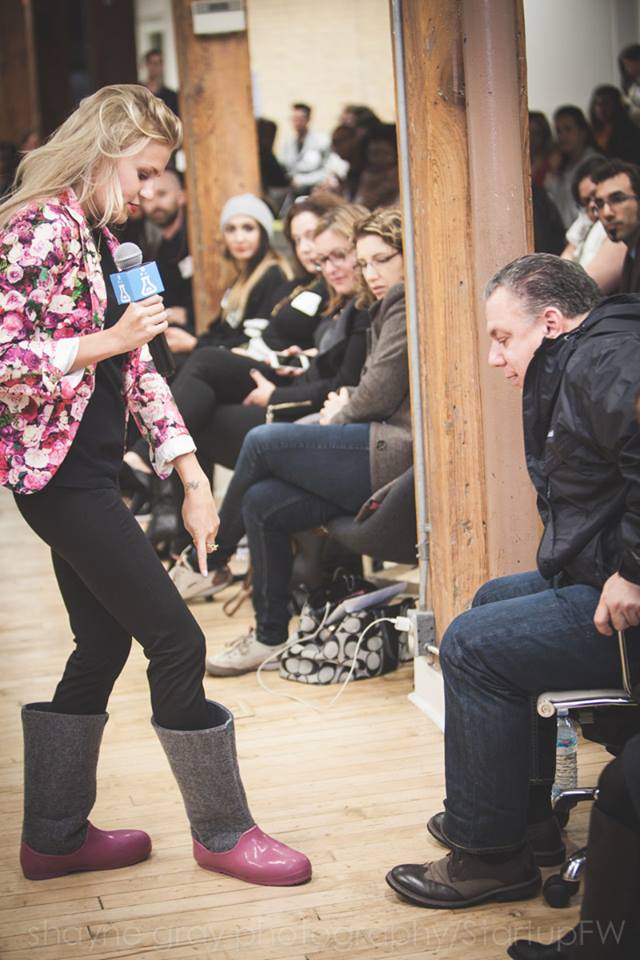
Pictured above is the 26-year-old founder of Love Winter, Polina Roufanova, modeling the Valenki boots (pronounced va-LENG-kee), which merge traditional 300-year-old Siberian footwear design with modern styling and materials. They’re essentially a tall wool felt slipper with rubber galoshes that clip on. They’re designed to brave a cold (and slushy) Toronto winter, but then convert into versatile indoor slippers just by taking off the galoshes.
This is perhaps the perfect example of the creativity shown at Toronto’s Startup Fashion Week, a three-day long meeting point of fashion, technology and business which is ending today.
The event has featured presentations and panels on topics relating to an emerging world where technology influences fashion. It also seems like a great place to learn about trends in the areas of retail-tech, fashion-tech and wearable-tech, and presents some great networking opportunities for entrepreneurs in fashion design and digital fashion startups.
Hang Loose Media Studios (28 Logan Ave.) will be the location of the closing runway show, “The Future of Fashion”, which starts at 7pm tonight, and is followed by an afterparty. (For 50% off, use promocode: Launch50).
VANIKA, which bills itself as an independent label “rooted in a passion for biology”, is run by 16-year-old Vanessa Kiraly and seems particularly interesting, and undoubtedly represents the future of fashion.
As part of an initiative to support women in film and TV, producer Shasha Nakhai was given the opportunity to spend a week at Ubisoft’s Toronto office to learn the ins and outs of game production.
Ubisoft is, of course, the massively successful game studio behind the Assassin’s Creed and Far Cry franchises. However, it received a lot of negative attention when gamers could only play as a male character in Assassin’s Creed Unity. And with Far Cry 4, it (albeit narrowly) decided not to have a female playable character.
Meanwhile, general controversies such as “Gamergate” have revealed the frightening extent to which sexism is still a major issue in gaming.
Given this backdrop, it’s definitely important that gaming companies stop alienating women – who, by the way, make up 48-percent of all gamers – but also make a real effort try to get them to be involved in the gaming industry.
In a video from Ubisoft, Nakhai was given a warm welcome by the company, meeting with producers, programmers, creative directors, sound designers, and the motion capture team. While stereotypes are strong in the games industry, showing the different roles and diverse creative skills needed in modern games helps counteract the stereotype.
Nakhai said the games industry could be an overlooked opportunity for people trained in film and TV. “Even though you don’t have experience in the games industry, your skills can still be transferable,” she said.
However, to work in games, there are a few new things to get used to.
Nakhai said, “Game production seems to take much longer in development, and actually figuring out what you have in the first place. Whereas with a film, you have a script. You can read off the script and say, ‘This is going to be a good movie.’ And in gaming you don’t actually know that until you’ve actually tried it out.”
“We have sensors that track our sleep. We have sensors that track our steps. But there’s something that’s really missing,” says Ariel Garten. “Something that really determines how well you sleep, how many calories you burn, how good you feel the next day. And that’s what goes on in your mind.”
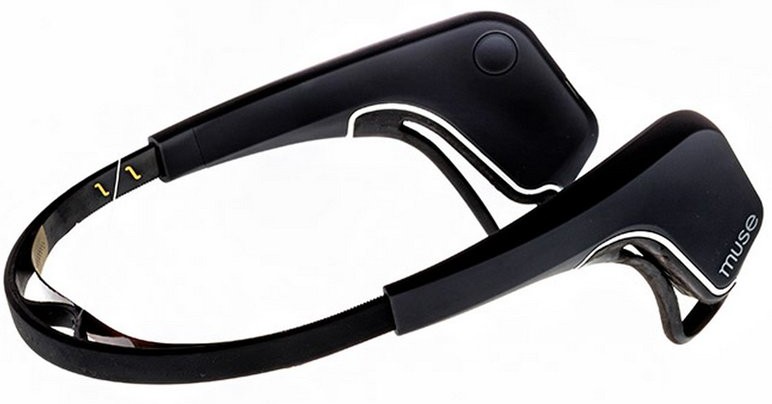
Garten is the CEO and co-founder of InteraXon, the Toronto startup behind the Muse brain-wave sensing headset which just launched in Canada after six years in development. Garten and fellow InteraXon team members were at the MaRS building on September 25 for the official Toronto launch of Muse.
Muse is a unique device that slips on like a pair of glasses. It has five electroencephalography (or EEG) sensors that record the brain’s electrical activity. This data is fed into the user’s mobile phone, which can determine the individual’s level of relaxation and focus.
While there are many potential uses for this technology, the headband is currently used as a form of assisted meditation. Tellingly, it is sold at Canadian bookstore chain Indigo, and through yoga and wellness brand Gaiam. Unlike austere mindfulness exercises, however, it makes a game of mental relaxation.
There are new games in development that feed on brain data, but the standard Muse game, “Muse Calm,” places the user on a beach. When they are calm, the user sees a peaceful beach on the screen. However, as mental disturbances enter the mind, the user will see waves form and the wind pick up.
The Muse Calm app is designed to guide users to mental calmness.
InterXon had originally intended for its brainwave sensor technology to help people interact with the physical world. For instance, it had created a chair that levitates and a version of the addictive “Ktarian game” featured in Star Trek TNG. During the 2010 Winter Olympics, InterXon took it to another scale, allowing people to control the lights of the CN Tower, Niagara Falls and the Parliament Buildings with their minds.
[aesop_content color=”#ffffff” background=”#333333″ columns=”1″ position=”none” imgrepeat=”no-repeat” floaterposition=”left” floaterdirection=”up”]Developers interested in using Muse as a way of adding brain input to their applications have a set of tools available to work with Muse.
[/aesop_content]
Yet, when it came to building Muse, the focus was not on experiencing something physical, but rather teaching the mind how to be calm and focused. And this seems especially appropriate given the constant barrage of email, phone alerts and online curiosities that make it difficult for many of us to unwind.
In a public discussion with WeAreWearables founder Tom Emrich, the team behind Muse discussed the design considerations behind Muse and the accompanying Muse Calm app.
Given the backlash against products like Google Glass, wearable technologies need to be mindful that their design doesn’t rub people the wrong way. Garten, who has a background in fashion design, explains, “For us it was very important to make something that was a fashion item – something that you felt comfortable walking down the street wearing, so we did extensive user testing.”
While her original conception was something that looked more futuristic and asymmetrical, testers didn’t like these sorts of prototypes. “The feedback we got was that people liked things that are symmetrical, they liked things that were balanced. Things that looked like something they already had.”
The simple headband was it.
[aesop_image imgwidth=”100%” img=”http://labto.wpengine.com/wp-content/uploads/2014/09/vlcsnap-2014-09-29-21h27m39s86.png” align=”left” lightbox=”on” caption=”On stage at We Are Wearables meetup at Toronto’s MaRS Discovery District. From Left: Raul Rupsingh, Jay Vidyarthi, Trevor Coleman, Ariel Garten.” captionposition=”right”]
Next, it was important to create an interaction within Muse Calm that subtly helps users reach a state of restfulness, without disrupting their calmness.
“People needed a way to experience the technology,” says Interaxon co-founder and Chief Product Officer Trevor Coleman.
He came up with the “metaphor” of the beach when thinking about a Zen koan: Basically, two monks were looking at a flag blowing in the wind. One said the flag was moving, and the other said the wind was moving. Unable to agree among themselves, they asked the Zen Master who said, “only mind is moving.”
Advanced users will find that, if they are very still, birds would come. This was an element added by Jay Vidyarthi, InteraXon’s senior interaction designer, who saw the birds being another element of feedback that people found useful. He explains wanting and not wanting the bird in the video below.
There’s no doubt that hearing people talk about the experience of Muse makes you think – what are they smoking? But it might just be because we’re so unused to technology helping bring us – for lack of a better term – enlightenment.
Coleman, however, notes that Muse isn’t a quick fix or an “instant meditation machine”. He sees it more like a treadmill. It helps you work on a specific aspect of yourself, but you have to put effort into it.
“When we looked at this as a way where we could get people to actually improve their lives, I think giving people information is important, but you’ve got to give them something actionable that they can do,” he says. “With this interaction specifically, people sit down, they engage with us.”
Garten, who is the supernaturally calm and focused like a yoga instructor, says meaningful change can come about through how one thinks and feels about the world.
For instance, one customer is a woman who uses Muse to deal with the stress of her husband’s cancer. The relaxation exercises helps her be a more supportive partner, and kinder to the people around her despite her unfortunate situation.
Gaten sees this as “an opportunity to allow people for the first time to understand their own mind, and use that information to improve themselves.”
This shrunk-down and stylish EEG sensor also has the potential to draw from a large source of anonymized data, which could help researchers better understand stress symptoms in the general population, not just from lab tests.
Depending on your perspective, this technology could be exciting – or calming.